
How to calculate your calorie needs – a guide
Learn how to calculate your calorie needs step by step. Learn what BMR and CMR are, and how to determine calories for weight loss or maintenance.
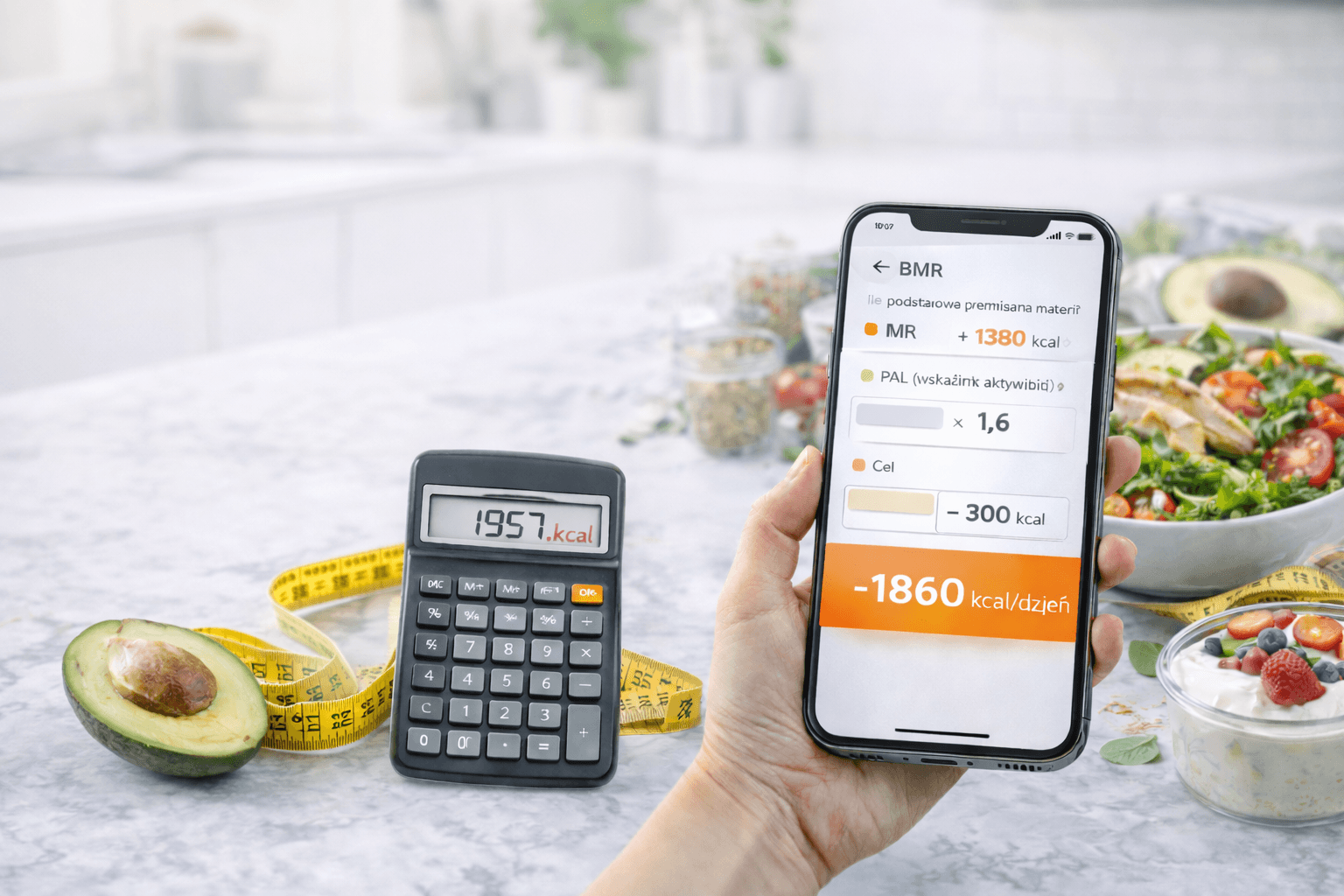
One of the most important elements of planning a healthy diet is calculating your calorie needs. This is the number of calories you should consume each day to maintain, lose, or gain weight.
Many people start a diet without first determining how many calories their body actually needs. As a result, the diet can be too restrictive or, conversely, produce no results at all.
In this article, we'll show you how to calculate your calorie needs step by step, what your basal metabolic rate is, and how to determine the appropriate calorie intake for your diet based on your goals.
What is Calorie Needs?
Calorie needs are the amount of energy your body needs each day to function properly.
This energy is used for:
breathing
heartbeat
brain function
maintaining body temperature
physical activity
digesting food
If you consume as many calories as you need, your body weight remains stable.
However:
A calorie surplus leads to weight gain
A calorie deficit leads to weight loss
That's why it's so important to correctly calculate your daily energy needs.
Basal Metabolic Rate (BMR)
The first step in calculating your calorie needs is to determine your BMR – your basal metabolic rate.
BMR is the amount of energy your body uses for basic life processes at rest.
It includes the energy needed for:
heartbeat
breathing
internal organ function
nervous system function
Importantly, BMR constitutes up to 60–70% of your total energy needs.
What determines BMR?
Basal metabolic rate depends on several factors:
age
gender
height
body weight
amount of muscle tissue
People with more muscle mass typically have higher caloric needs.
Total Metabolic Rate (TMR)
The next step is to calculate your TMR.
TMR takes into account not only basic life functions, but also:
physical activity
daily exercise
work
training
TMR determines how many calories you need daily to maintain your current body weight.
How to Calculate Calorie Needs Step by Step
Calculating your calorie needs can be divided into several simple steps.
Step 1 – Calculate your TMR
The most commonly used formula is the Mifflin–St. Jeor formula.
For women:
PPM = (10 × body weight in kg) + (6.25 × height in cm) − (5 × age) − 161
For men:
PPM = (10 × body weight in kg) + (6.25 × height in cm) − (5 × age) + 5
Step 2 – Determine your physical activity level
To calculate your total caloric needs, multiply your PPM by your physical activity factor.
Step 3 – Calculate your CPM
CPM = PPM × Physical Activity Factor (PAL)
The result shows how many calories your body needs per day.
Physical Activity Factor (PAL)
PAL indicates your physical activity level per day.
The most commonly used values are:
1.2 – very low activity (sedentary lifestyle)
1.4–1.5 – low activity
1.6–1.7 – moderate activity
1.8–2.0 – high activity
2.2 and above – very high activity
For example, a person working at a desk and exercising 2–3 times a week might have a calorie index of around 1.5–1.6.
How to determine calories for weight loss or weight maintenance
Once you have calculated your CPM, you can determine the calorie intake of your diet based on your goal.
Weight Maintenance
To maintain your weight:
Consume a number of calories equal to your CPM
Weight Loss
To lose weight, you must create a calorie deficit.
The most common recommendations are:
300–500 kcal less than your CPM
Such a deficit allows you to lose approximately:
0.5–1 kg per week
Building Body Mass
If your goal is to gain weight or build muscle, you should introduce a calorie surplus.
The most common recommendations are:
approximately 200–400 kcal more than your CPM
Example Calculation of Calorie Needs
This example calculation will help you better understand the entire process.
Example
Woman:
30 years old
165 cm tall
65 kg body weight
BPM calculation:
10 × 65 + 6.25 × 165 − 5 × 30 − 161
BPM ≈ 1400 kcal
If her activity factor is 1.5:
BPM = 1400 × 1.5
BPM ≈ 2100 kcal
This means:
weight maintenance: approximately 2100 kcal
weight loss: approximately 1600–1800 kcal
Why does calorie requirement change?
It's important to remember that calorie requirement is not constant.
It can change depending on:
weight changes
activity level
age
hormonal changes
stress level
Therefore, it's worth updating your calorie intake every few weeks.
Common Mistakes
Many people make similar mistakes when calculating their calorie needs.
The most common are:
choosing too high a level of physical activity
too large a calorie deficit
failing to consider snacks and drinks
ignoring weight changes
following a very low-calorie diet
Correctly calculating calories is only the first step. Diet quality and regularity are also crucial.
Frequently asked questions
Czy zapotrzebowanie kaloryczne jest takie samo dla każdego?
Nie. Zapotrzebowanie zależy od wielu czynników, takich jak wiek, masa ciała, wzrost czy poziom aktywności fizycznej.
Jak często należy ponownie obliczać zapotrzebowanie kaloryczne?
Najlepiej robić to co kilka tygodni, szczególnie podczas redukcji masy ciała.
Czy kalkulatory kalorii w internecie są dokładne?
Są dobrym punktem wyjścia, ale mogą się różnić od rzeczywistego zapotrzebowania.
Czy można schudnąć bez liczenia kalorii?
Tak, jednak liczenie kalorii pomaga lepiej kontrolować dietę.
Co jest ważniejsze – kalorie czy jakość diety?
Oba elementy są ważne. Odpowiednia kaloryczność powinna iść w parze ze zbilansowaną dietą.
Zespół e-dietetyk.com
We are a team of dietitians and AI specialists. We create personalised nutrition plans based on science and modern technology.
More about the author →Want a diet tailored to your lifestyle?
Fill out a short assessment and receive your personalised meal plan today.