How to read food labels
Learn how to read food labels. Find out what to look for in ingredients and nutritional values, and avoid marketing traps.
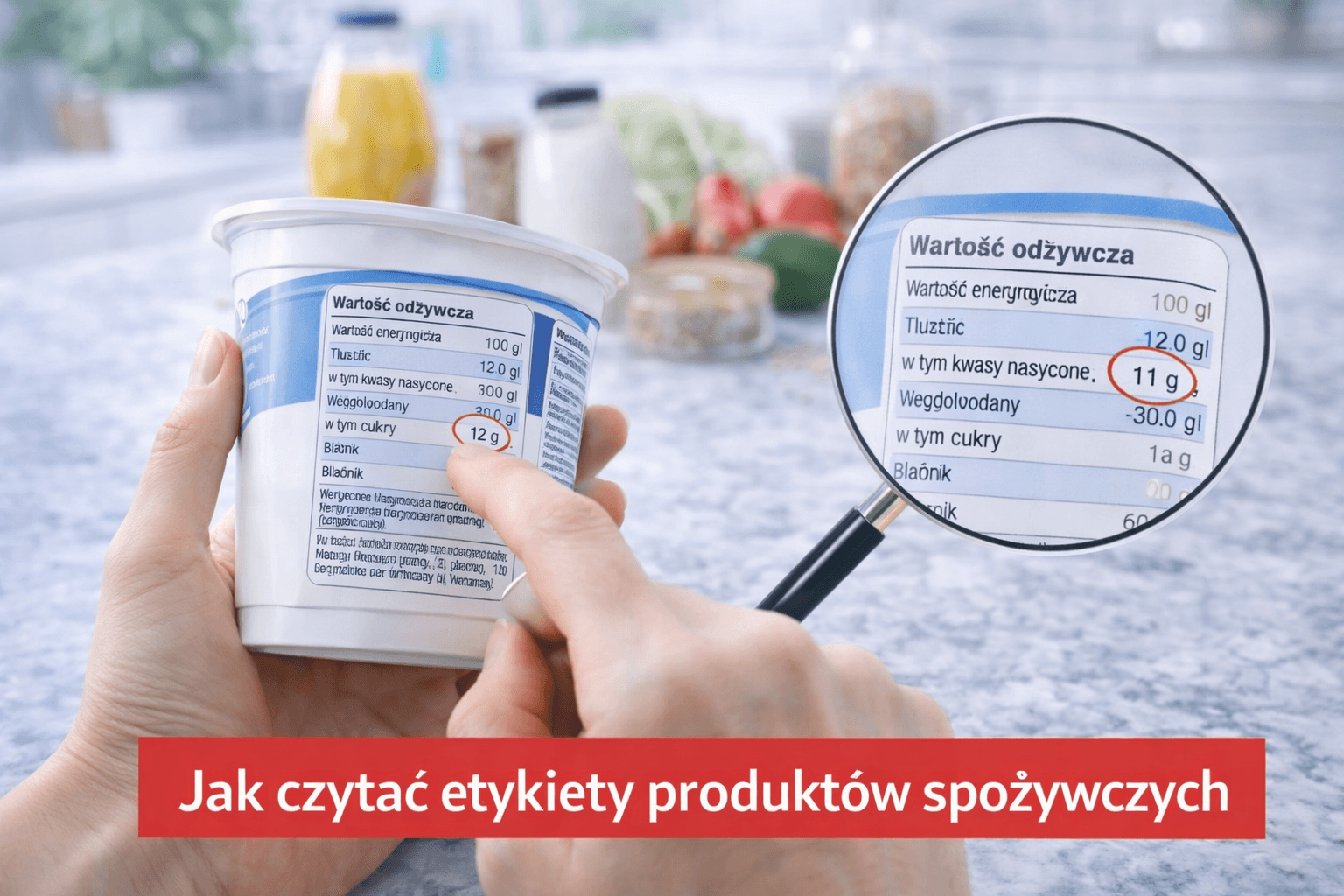
Modern stores offer thousands of food products that vary in composition, nutritional value, and degree of processing. For many people, grocery shopping can be a challenge, especially when packaging is labeled with terms like "fit," "light," or "natural." Therefore, it's important to know how to read food labels to make informed, healthier choices.
Product labels contain a wealth of valuable information—from ingredients to energy values and macronutrient content. Knowing how to interpret them allows you to make better nutritional decisions, especially when trying to lose weight or improve your health.
In this article, we'll explain how to read food labels step by step, what to look for when shopping, and the most common marketing traps used by food manufacturers.
Why it's important to read food labels
Reading food labels helps you make more informed nutritional decisions.
This allows you to:
Control the calorie count in your diet
Limit your sugar and salt intake
Choose products with better ingredients
Avoid overly processed foods
This is especially important for people trying to lose weight, as some products may contain significantly more calories than you think.
How to read food labels step by step
To properly evaluate a product, it's worth paying attention to several key elements of the label.
The most important information can be found in:
Product ingredients
Nutritional table
Serving size
Additional labeling
It's best to analyze the label in this order.
Product ingredients – the most important information
The product ingredients are the first thing you should pay attention to.
The rule is very simple:
Ingredients are listed in order from highest to lowest.
If sugar or fat is listed first, it means the product contains the most of them.
What to look for in an ingredient list
A good product should have:
a short list of ingredients
natural ingredients
no unnecessary additives
The shorter and simpler the list of ingredients, the less processed the product usually is.
Nutritional Value – What Do the Numbers Mean
The nutritional value table contains information on energy and nutrient content.
It is most often provided for:
100 g of product
one serving
Key Table Elements
The label contains information on:
calories (kcal)
protein
fat
carbohydrates
sugars
salt
This information helps you assess whether a product fits your diet.
Sugar, Fat, and Salt on Labels
Some ingredients are particularly worth checking.
Sugar
Sugar may be listed under different names.
The most common are:
high-fructose corn syrup
corn syrup
maltodextrin
sucrose
fructose
A large amount of sugar in a product can increase its caloric value.
Fat
It's worth checking the label for:
total fat
saturated fat
Excessive consumption of saturated fat can increase the risk of heart disease.
Salt
Too much salt in the diet can lead to hypertension.
It's best to choose products containing less than 0.3 g of salt per 100 g of product.
Marketing traps on packaging
Manufacturers often use marketing slogans that can be misleading.
The most common terms are:
fit
light
natural
no added sugar
zero fat
This doesn't always mean the product is healthy.
For example, a product labeled "fat-free" may contain a lot of sugar.
Therefore, it's always worth checking the ingredients and nutritional values, not just the claims on the packaging.
How to quickly assess the quality of a product in the store
When shopping, we don't always have time to carefully analyze the label.
However, you can use a simple method.
Quick product assessment
Check the ingredients – the shorter the list, the better
See the sugar and fat content
Check the calorie content
Compare the product with other similar products
This makes it easier to choose a healthier option.
Common Mistakes
Many people make similar mistakes when reading labels.
The most common are:
Focusing only on calories
Ignoring the product's ingredients
Being influenced by marketing slogans
Not paying attention to portion size
Omitting sugar and salt content
Reading labels carefully helps you avoid these pitfalls.
Summary
The ability to read food labels is crucial for health and conscious eating.
The most important rules are:
Always check the product's ingredients
Pay attention to the amount of sugar, fat, and salt
Analyze the nutritional information table
Don't rely solely on marketing slogans
This makes it easier to choose products that support a healthy diet.
Frequently asked questions
Dlaczego warto czytać etykiety produktów spożywczych?
Czytanie etykiet pomaga kontrolować jakość diety i unikać nadmiernie przetworzonej żywności.
Co oznacza kolejność składników w składzie?
Składniki są wymienione od największej do najmniejszej zawartości w produkcie.
Czy produkty „fit” zawsze są zdrowe?
Nie. Często zawierają dużo cukru lub innych dodatków.
Na co zwrócić uwagę w tabeli wartości odżywczych?
Przede wszystkim na kalorie, cukry, tłuszcze nasycone oraz ilość soli.
Czy krótki skład produktu oznacza lepszą jakość?
Najczęściej tak, ponieważ wskazuje na mniejszy stopień przetworzenia.
Zespół e-dietetyk.com
We are a team of dietitians and AI specialists. We create personalised nutrition plans based on science and modern technology.
More about the author →Want a diet tailored to your lifestyle?
Fill out a short assessment and receive your personalised meal plan today.