
How to plan a menu for the whole week
Learn how to plan your meal plan for the entire week. Discover a simple way to eat healthy, save time, and make sticking to your diet easier.
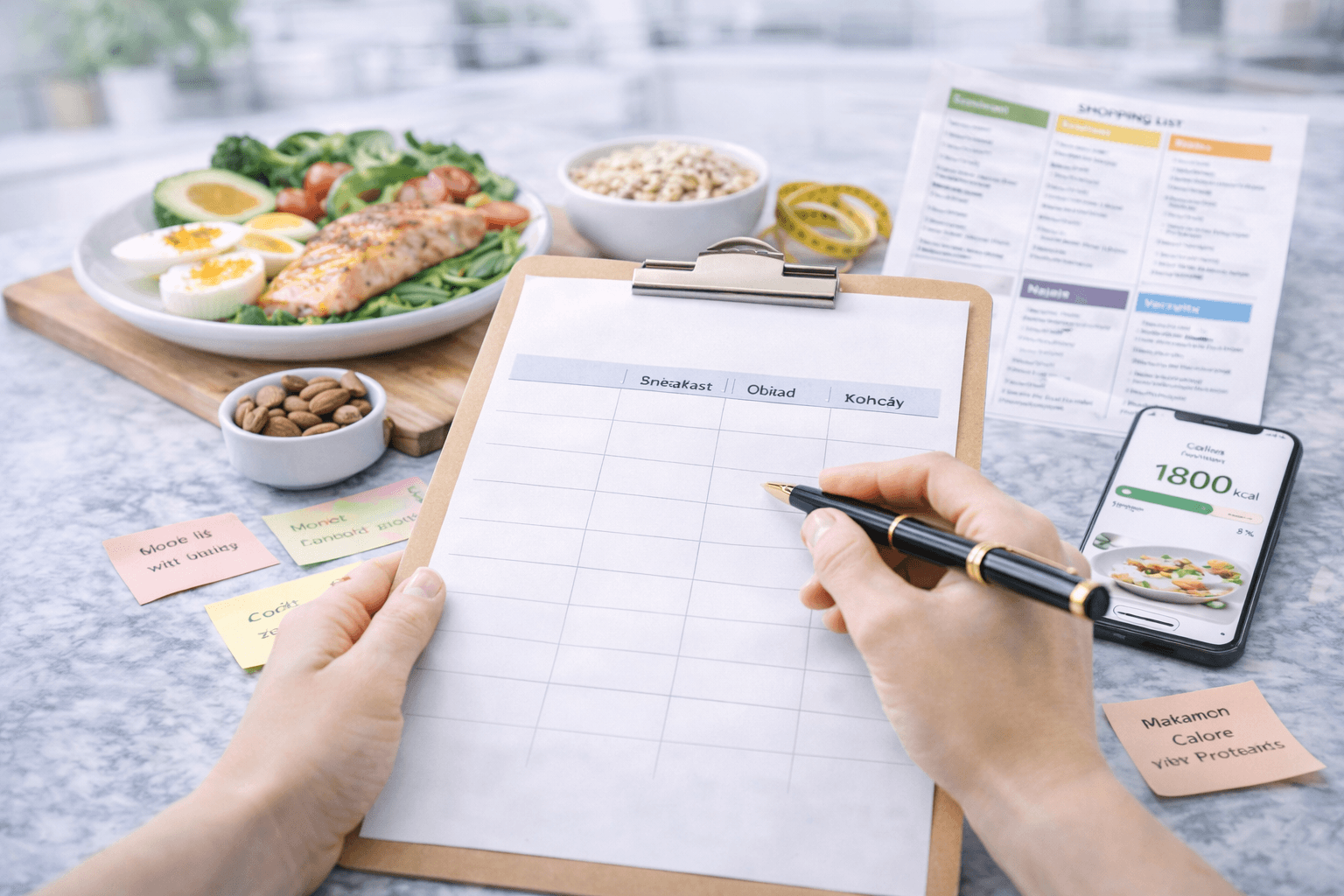
Planning meals several days in advance is one of the simplest ways to improve the quality of your diet. This makes it easier to control what you eat, avoid haphazard food choices, and save time throughout the week. It's no wonder, then, that more and more people are wondering how to plan a menu for the entire week.
The lack of a plan often leads to reaching for fast and highly processed foods, especially when we're tired or don't have time to cook. A well-planned menu, on the other hand, allows you to maintain a healthy diet, control the calorie content of your meals, and reduce food waste.
In this article, you'll learn how to plan a menu for the entire week step by step, what principles to follow, and how to avoid the most common mistakes.
Why is it worth planning a menu?
Menu planning offers many benefits for both your health and your daily time management.
The key benefits of meal planning include:
Maintaining a healthy diet is easier
Controlling the calorie count of meals
Saving time throughout the week
Reduced food waste
Fewer impulsive purchases
People who plan their meals are more likely to choose products with higher nutritional value and are less likely to reach for fast food.
How to plan a menu for the entire week, step by step
Meal planning doesn't have to be difficult. Simply divide the entire process into a few simple steps.
Key steps for meal planning
Determining your diet goal
Planning the number of meals per day
Choosing simple recipes
Preparing a shopping list
Preparing some meals in advance
Using these principles allows you to quickly create a weekly meal plan.
Determining your diet goal
The first step is to determine what your diet goal is.
The most common goals are:
weight loss
weight maintenance
health improvement
energy increase
The diet goal influences:
calorie content
portion size
food selection
Therefore, it's worth starting your planning with this step.
Meal planning for several days
The simplest way to plan is to write down your meals for the entire week.
The most common plans include:
3 main meals
1–2 snacks
Sample daily routine
breakfast
lunch
dinner
snack or afternoon snack
It's best to choose simple meals that are easy to prepare.
Creating a shopping list
A shopping list is a key element of meal planning.
It helps:
avoid buying unnecessary products
save time at the store
reduce food waste
It's best to divide your shopping list into categories:
vegetables and fruits
protein products
grain products
dairy
healthy fats
This makes shopping faster and more organized.
Preparing meals in advance
One of the best ways to maintain a healthy diet is to prepare some of your meals in advance.
This approach is often called meal prep.
You can prepare in advance:
cooked grains and rice
chopped vegetables
roasted meat or fish
ready lunchboxes for several days
This means that meal preparation takes much less time during the week.
How to diversify your weekly menu
A monotonous diet can quickly become boring, so it's worth ensuring variety.
A good idea is to:
rotate different protein sources
change carbohydrate additions
use different vegetables
experiment with spices
This keeps your diet interesting and easier to maintain.
Common Menu Planning Mistakes
Many people make similar mistakes when planning a weekly menu.
The most common are:
overly complicated recipes
lack of a shopping plan
lack of meal variety
not adapting the diet to your lifestyle
planning too few meals
Avoiding these mistakes helps create a more realistic eating plan.
Summary
Planning a weekly menu is one of the easiest ways to maintain a healthy diet.
The most important rules are:
defining your diet goal
planning meals for several days
preparing a shopping list
choosing simple recipes
preparing some meals in advance
This makes it easier to maintain healthy eating habits and save time throughout the week.
Frequently asked questions
Czy planowanie jadłospisu pomaga schudnąć?
Tak. Dzięki planowaniu łatwiej kontrolować kaloryczność diety i unikać impulsywnego jedzenia.
Na ile dni najlepiej planować jadłospis?
Najczęściej planuje się jadłospis na 5–7 dni.
Czy trzeba gotować codziennie?
Nie. Wiele posiłków można przygotować wcześniej i przechowywać w lodówce.
Jak uniknąć monotonii w diecie?
Warto zmieniać produkty, przyprawy i sposoby przygotowania potraw.
Czy planowanie posiłków oszczędza pieniądze?
Tak. Pozwala kupować tylko potrzebne produkty i ogranicza marnowanie jedzenia.
Zespół e-dietetyk.com
We are a team of dietitians and AI specialists. We create personalised nutrition plans based on science and modern technology.
More about the author →Want a diet tailored to your lifestyle?
Fill out a short assessment and receive your personalised meal plan today.